TLDR Meaning in Text: What It Really Means in Messages & Chats
If you’ve ever received a long message and seen someone reply with “TLDR,” you might have paused for a second. What does it actually mean? And is it rude?
Understanding the TLDR meaning in text helps you feel more confident in modern chat culture. It’s a common text message abbreviation used in digital messaging, group chats, and even work conversations. Once you know how it works, it becomes easy to read and use naturally.
For a complete explanation of the abbreviation across platforms, see our full guide on TLDR meaning.
Let’s break it down step by step.
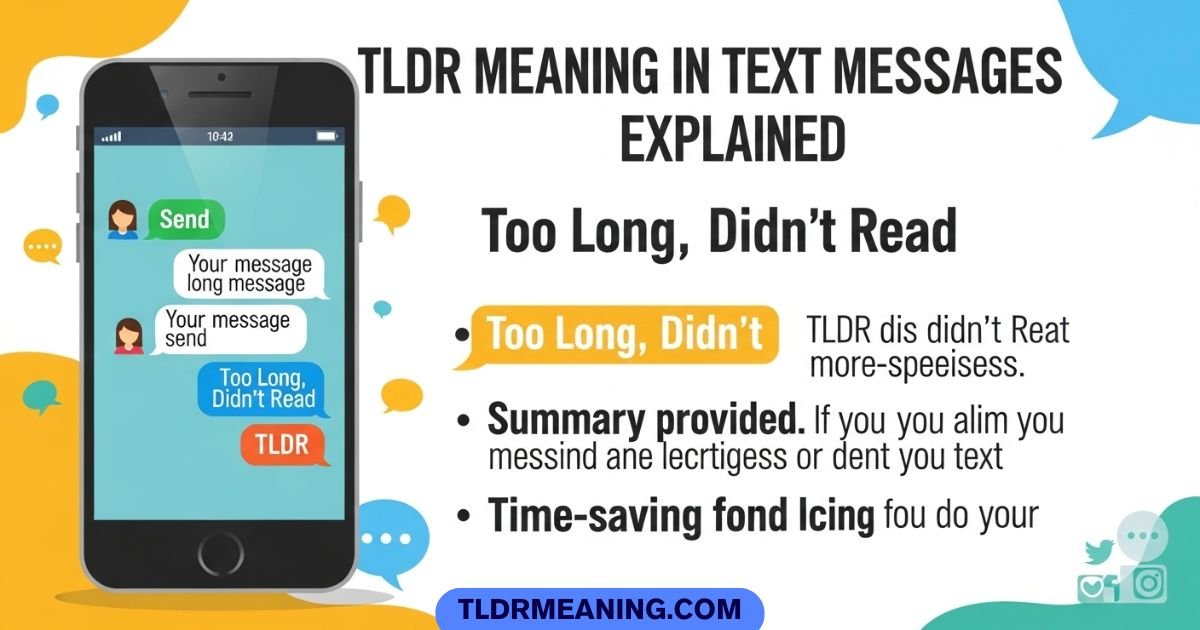
TLDR meaning in text: TLDR stands for “Too Long; Didn’t Read.” In text messages, it is used to summarize long content or say a message was lengthy.
What Does TLDR Mean in a Text Message?
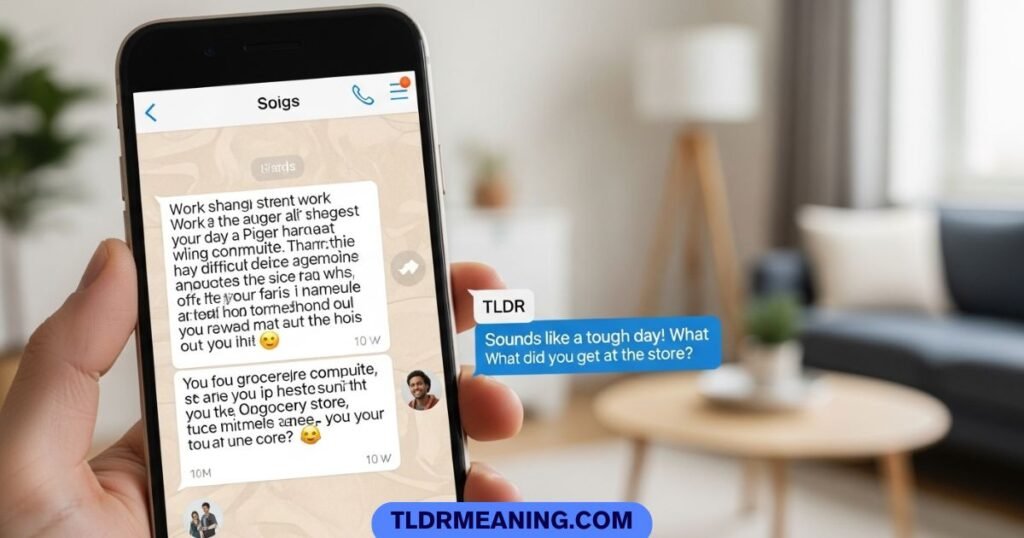
TLDR stands for “Too Long; Didn’t Read.” It’s an internet slang term people use when a message, post, or explanation feels too long to read fully. In simple words, it means the person skipped reading because it was lengthy.
In texting and online conversation, TLDR can be used in two main ways. Sometimes, a reader replies with “TLDR” to say they didn’t read everything. Other times, the writer adds a quick summary line at the end of a long message and labels it “TLDR” to help others understand the main point quickly.
For example, someone might write a detailed explanation about a plan and then add:
TLDR: Meeting moved to Friday at 3 PM.
In this case, TLDR acts as a message recap. It improves message clarity and saves time, especially in fast-moving group chat communication.
You may see TLDR in WhatsApp messages, Instagram DMs, emails, or forums. It has become part of informal texting style and modern chat culture. The tone depends on how and where it’s used.
Why Do People Use TLDR in Texting?
People use TLDR because digital messaging moves quickly. Long paragraphs can feel overwhelming, especially in busy group chats.
This short form in texting helps in a few ways. It gives a quick summary line when information is detailed. It acts as a conversation shortcut when attention spans are short. It also reflects casual messaging habits where speed matters.
Sometimes, someone uses TLDR honestly to admit they didn’t read everything. Other times, writers include it themselves to make their message easier to understand.
In short, TLDR supports message clarity in modern chat culture. It keeps communication efficient without needing long back-and-forth explanations.
Is TLDR Rude in Text Messages?
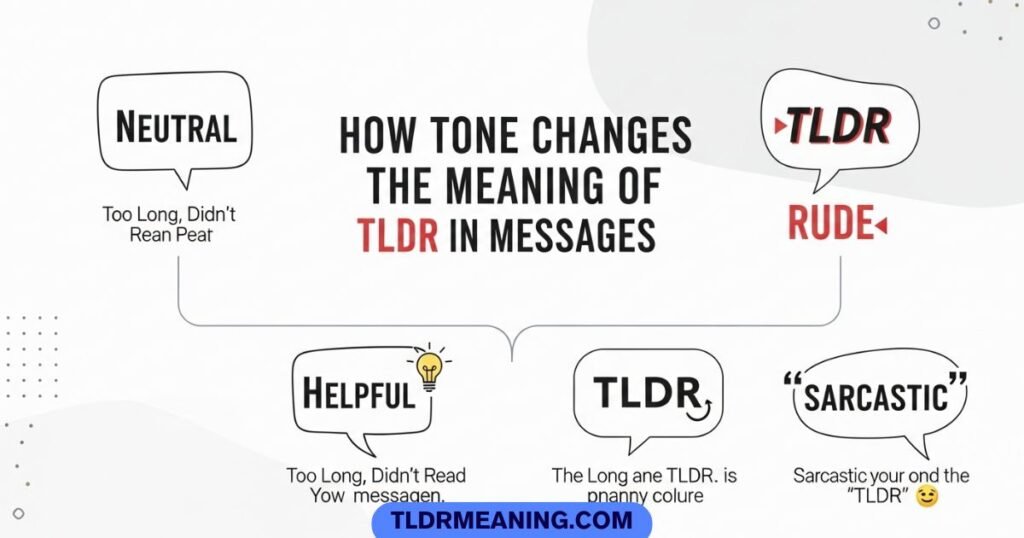
Whether TLDR is rude depends on tone in text messages and the situation. The same word can feel helpful in one chat and dismissive in another.
In close friendships, replying “TLDR” might feel playful. It can mean, “That’s a lot. Can you give me the short version?” In this setting, it often sounds casual and harmless.
However, in serious conversations, it may feel disrespectful. If someone shares something emotional or personal, replying with TLDR could make them feel unheard.
In professional or school settings, simply writing “TLDR” without context can sound abrupt. It’s usually better to ask politely for a short summary instead.
So, is TLDR rude in text? It can be. The key factors are relationship, context, and delivery. Understanding social cues in digital messaging makes a big difference.
You may also want to read our detailed breakdown on is TLDR rude in text messages.
How to Respond When Someone Says TLDR
If someone replies with TLDR to your message, stay calm. It doesn’t always mean they are being rude.
You can respond by giving a short, clear summary of your main point. This keeps the conversation moving and improves communication.
For example:
- “TLDR: I’ll be late by 20 minutes.”
- “Short version: We need to submit the form today.”
In casual chats, you can also respond with humor. In work or school messages, keep your reply simple and direct.
Knowing how to respond to TLDR helps you stay confident in online conversation without overthinking the situation.
Real Examples of TLDR in Text Conversations
Example in a Casual Chat
Friend: “So yesterday I went to the mall, then met Sara, then we tried that new café, and the line was so long…”
Reply: “TLDR please 😂”
Here, TLDR is playful. It fits the informal texting style between friends.
Example in a Work or School Message
Team member: “I’ve written the full project update with all the details and feedback from the client.”
Reply: “Can you share a TLDR version for quick review?”
In this case, it’s about efficiency. The TLDR abbreviation in messaging helps save time.
Example in a Group Conversation
Group chat: Multiple people sending long updates about weekend plans.
One person writes:
“TLDR: Movie at 8 PM, dinner after.”
Here, TLDR is used as a helpful summary for group chat communication. It keeps everyone on the same page.
TLDR vs Other Common Text Abbreviations
TLDR is just one of many common texting abbreviations such as FYI, BTW, or IMO.
The difference is purpose. TLDR relates to message length and summaries. It signals that something is long or provides a condensed version.
FYI (For Your Information) shares information. BTW (By The Way) changes the topic. IMO (In My Opinion) expresses a personal view.
TLDR texting meaning focuses on simplifying content. It’s about shortening, not adding or shifting context.
Understanding the difference between TLDR and summary in text also helps. A summary can be written without labeling it. TLDR clearly marks that a quick recap follows.
TLDR Meaning in Text vs Social Media
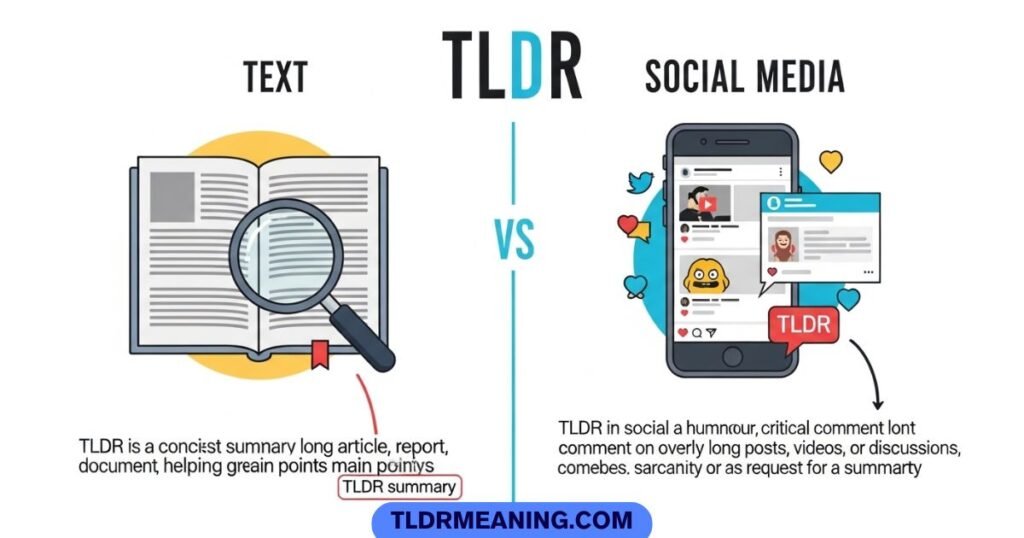
In text messages, TLDR usually appears in one-to-one chats or small group conversations. It is often used as a quick reply or a short summary at the end of a long message. The tone in texting depends heavily on the relationship between people. Among friends, it may feel playful. In work chats, it usually serves as a practical recap to improve clarity.
On social media, TLDR is more structured. It often appears at the end of long captions, forum posts, or threaded discussions. Instead of reacting to someone else, users typically add their own TLDR to summarize their content for readers. In this context, it functions more like a visible summary label. While texting focuses on conversation speed, social media use focuses on helping large audiences understand content quickly.
When Should You Avoid Using TLDR in Text?
There are moments when TLDR does not fit well.
Avoid using it in emotional or serious conversations. If someone is sharing something important or personal, asking for TLDR may seem insensitive.
Be careful in formal emails or professional communication unless it’s framed politely. Tone matters in digital messaging.
Also avoid it when clarity is already present. If a message is short and direct, using TLDR would not make sense.
Using good judgment ensures that chat language remains respectful and effective.
FAQ
What does TLDR mean in text?
It stands for “Too Long; Didn’t Read.” It is used to say a message was lengthy or to introduce a short summary.
Is TLDR slang in texting?
Yes, it is considered an internet slang term. It is common in casual messaging and online conversation.
How to use TLDR in text correctly?
You can place it before a quick summary at the end of a long message. It should be clear and helpful, not sarcastic.
Is TLDR rude in text?
It can feel rude if used in serious conversations. In casual chats, it is often neutral or playful.
Can TLDR be used in group chats?
Yes. TLDR used in group chat often improves message clarity by summarizing long discussions.
If you enjoy learning about chat language and modern texting shortcuts, you might also like reading about other common abbreviations people use daily in messages and social media conversations.
Final Thoughts on TLDR Meaning in Text
The TLDR meaning in text is simple, but how you use it matters. It works as a quick summary tool and a conversation shortcut in modern chat culture.
In casual settings, it fits naturally into informal texting style. In serious situations, it requires more care. Understanding tone, context, and message clarity helps you use it wisely.
Once you know when and how to use TLDR, it becomes just another helpful part of everyday digital communication. Clear communication in text messages often depends on small details like this abbreviation.