
If you spend time online, you have probably seen “TLDR” at the end of a long post or in a quick reply to a long message. Many people search for the TLDR meaning after noticing it in chats, comments, or social media captions.
This small group of letters is more than random internet slang. It is a text abbreviation that reflects how people communicate in fast-moving digital spaces. In online communication, long messages often get skipped, and readers look for a quick explanation instead.
Understanding this short form in text helps you follow modern chat language and respond the right way. Let’s explore what it really means, how it’s used, and when it makes sense to use it yourself.
TLDR meaning: TLDR stands for “Too Long; Didn’t Read.” It is used to summarize long messages or indicate that something is lengthy.
What Does TLDR Mean?
The simple answer to “what does TLDR mean” is this: it stands for “Too Long; Didn’t Read.”
It is used when a message, post, or article feels very long. Sometimes it expresses that someone skipped reading the full text. Other times, it introduces a brief recap of the main point.
In digital messaging, attention spans are short. People scroll quickly. TLDR became popular because it matches the fast pace of online conversation. It acts as a shortcut in communication.
For example, if someone writes a very detailed story in a group chat, another person might reply with “tldr” to signal they want a shorter version. In other cases, the writer may add their own TLDR at the end to help readers.
The meaning depends on context and tone. It can be playful, practical, or slightly dismissive, depending on how it is used.
TLDR Full Form Explained
The TLDR full form is “Too Long; Didn’t Read.”
The semicolon in the middle is part of the original version: TL;DR. Over time, many people dropped the punctuation and simply write TLDR.
This acronym meaning became popular on early internet forums and message boards. Users would post long arguments or detailed explanations. Other readers, who did not want to read everything, would comment “TL;DR.”
Eventually, writers began using it themselves. Instead of waiting for someone to complain, they added a summary at the end of their own posts. That shift turned it from criticism into a helpful content summary label.
Today, TLDR is part of everyday internet culture. It appears in emails, blogs, Reddit threads, and even workplace chats.
Where Did TLDR Come From?
TLDR first became popular on early internet forums and message boards. Users often wrote long posts explaining their opinions or personal stories.
Other readers, who did not want to read everything, would reply with “TL;DR.” It was originally used as a reaction to very long content.
Over time, writers began adding their own TLDR at the end of posts. This changed its tone from criticism to a helpful summary label.
How Is TLDR Used in Text Messages?
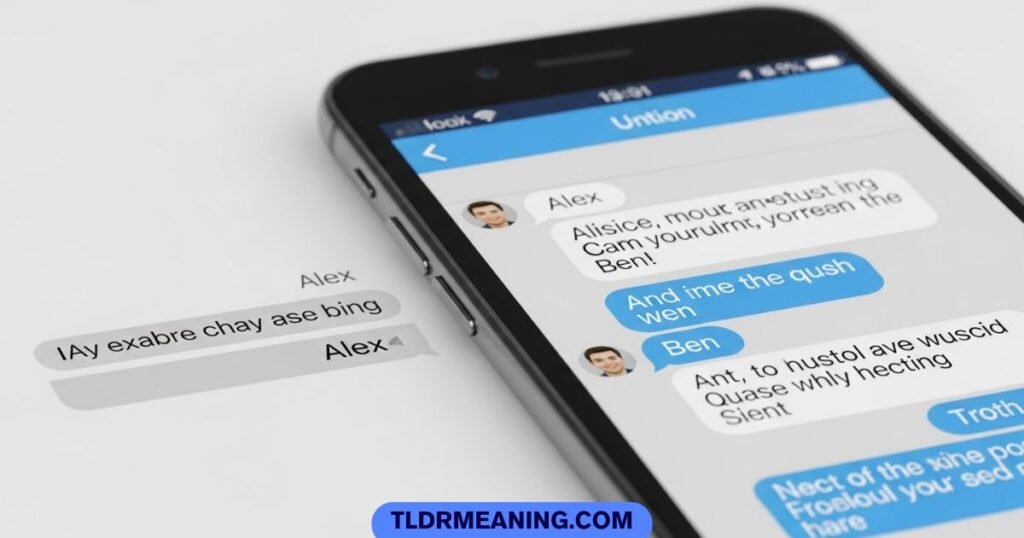
In texting and digital messaging, TLDR can serve different purposes. Its meaning depends on who uses it and where it appears in the conversation.
TLDR in Casual Chat
In casual messaging language, TLDR often appears as a reaction.
For example:
Friend:
“I went to the mall, then I saw Jake, and then we talked about the project, and then…”
Reply:
“TLDR 😂”
Here, it is usually playful. Among friends, it signals that the message feels long. It fits naturally into informal texting and Gen Z internet slang.
However, tone matters. If the original message is serious or emotional, replying with just “TLDR” may seem insensitive.
TLDR in Long Messages
Sometimes the person writing the long message adds TLDR themselves.
For example:
“I spoke with the manager, reviewed the report, and updated the numbers.
TLDR: The deadline has been moved to next Monday.”
In this case, it works as a long message shortcut. It helps busy readers understand the key point quickly.
This usage is common in work chats, school groups, and project discussions. It makes digital messaging more efficient.
If you want a deeper explanation focused only on messaging, read our full guide on TLDR meaning in text.
TLDR as a Summary Label
Another common use is as a summary at the end of post.
You might see:
TLDR: We are canceling tomorrow’s event due to weather.
Here, TLDR acts as a clear label. It tells the reader, “If you skipped everything above, read this.”
In this context, it is helpful, not rude. It improves clarity in online communication.
What Does TLDR Mean on Social Media?
TLDR appears frequently on social platforms. Each platform uses it slightly differently, but the core idea stays the same.
TLDR on Reddit
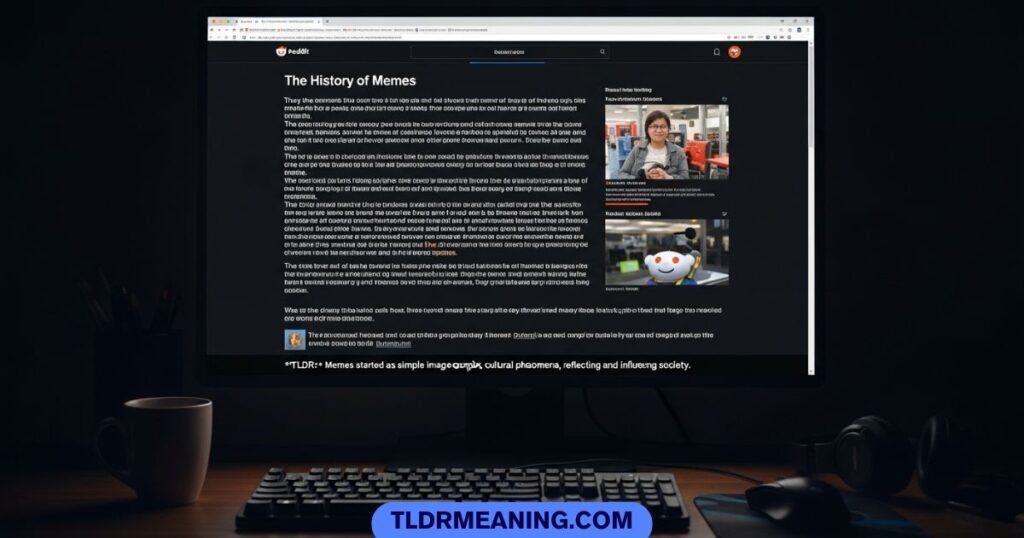
On Reddit, long posts are common. People share personal stories, advice requests, or detailed explanations.
At the end of a long post, writers often add:
TLDR: Short version of the situation.
On Reddit, this is part of the culture. Many readers scroll directly to the TLDR before deciding whether to read the entire post. It functions as a built-in message summary.
Without it, readers may skip the post completely.
TLDR on Instagram
Instagram captions can also be long, especially when people share personal updates or opinions.
After writing a detailed caption, someone might add:
TLDR: I started a new job and I’m excited.
This makes the content easier to digest. On a platform focused on quick scrolling, a short recap helps followers stay engaged.
In this way, TLDR fits into social media captions slang and modern online writing shortcuts.
TLDR on Twitter (X)
Even though Twitter (now X) limits character length per post, threads can become long.
Users sometimes add TLDR at the end of a thread to summarize multiple tweets:
TLDR: The policy change will affect small businesses the most.
This quick explanation helps readers who do not want to read every part of the thread. It supports fast online conversation.
Is TLDR Rude or Helpful?
Many people wonder, “Is TLDR rude?”
The answer depends on context.
If someone replies to your personal message with only “TLDR,” it can feel dismissive. It may suggest they did not care enough to read what you wrote.
However, when the writer uses TLDR as a summary label, it is helpful. It shows consideration for the reader’s time. In busy group chats or professional settings, it improves clarity.
In online communication, tone is often hard to read. Because TLDR is short, it can appear blunt. That is why context matters.
If you are unsure, it is safer to use TLDR to summarize your own message rather than as a reaction to someone else’s.
You can also explore whether TLDR is rude in text messages and how tone changes its meaning.
When Should You Use TLDR?
You should consider using TLDR when your message is long and contains multiple details.
It works well in situations such as:
- Group project updates
- Community announcements
- Online forum posts
- Detailed explanations in chat
It is especially useful in digital messaging where people skim instead of reading deeply.
However, avoid using it in very formal documents. In professional reports, writing “Summary” or “Executive Summary” is more appropriate.
Knowing how to use TLDR properly helps you balance clarity and tone.
Examples of TLDR in Real Conversations
Here are realistic TLDR examples in different contexts.
Example 1 – Friend Chat:
“I tried three different cafes today, but they were all full. Then I finally found one near the park, and the coffee was amazing.
TLDR: Found a great new cafe after a long search.”
Example 2 – Work Chat:
“I reviewed the budget, updated the spreadsheet, and spoke with the supplier.
TLDR: We are within budget and on schedule.”
Example 3 – Social Media Post:
“I’ve been thinking about changing careers for months. After many interviews and discussions, I finally decided to accept the offer.
TLDR: I’m switching careers next month.”
These examples show that TLDR abbreviation is flexible. It adapts to casual and semi-professional settings.
TLDR vs Summary: What’s the Difference?
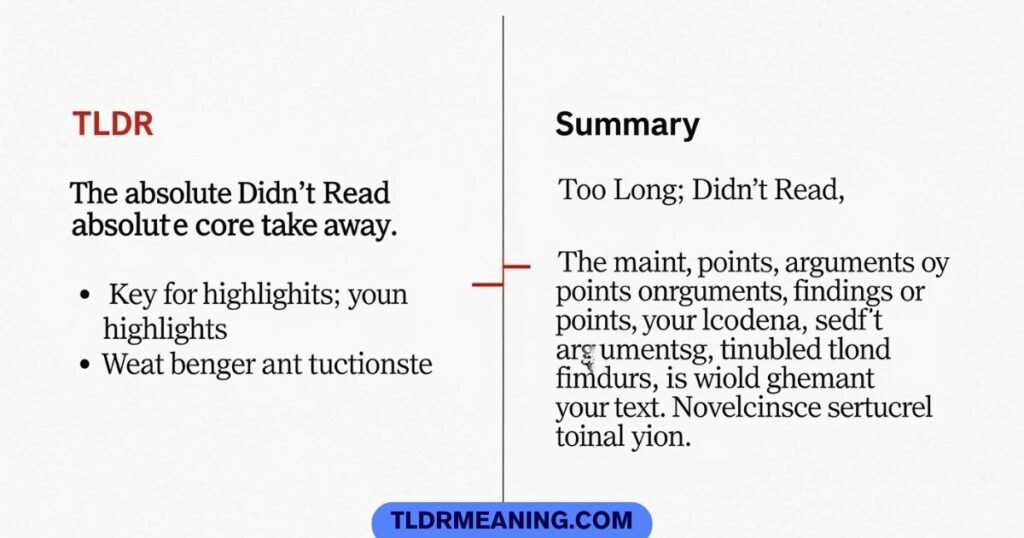
At first glance, TLDR and summary seem identical. Both provide a shorter version of longer content.
The main difference is tone and setting.
“Summary” sounds formal and neutral. It appears in academic writing, reports, and structured documents.
“TLDR” is informal. It belongs to chat language, internet slang, and casual online communication.
For example:
In a business report:
“Summary: The company increased revenue by 10%.”
In a forum post:
“TLDR: Revenue went up by 10%.”
The purpose is similar. The style reflects the environment.
Understanding the difference between TLDR and summary helps you choose the right wording for each situation.
Common Mistakes People Make With TLDR
Even though TLDR is simple, people sometimes misuse it.
One common mistake is using it as a response to serious or emotional messages. This can make the other person feel ignored.
Another mistake is placing it randomly in the middle of text. TLDR works best at the beginning or end of a message.
Some people also misunderstand its meaning and think it always shows laziness. In reality, it often improves communication by offering clarity.
Using it thoughtfully ensures that it supports your message rather than weakening it.
Other Internet Slang Similar to TLDR
TLDR is just one entry in a long internet acronyms list. Many short forms in text exist to save time in digital messaging.
Some popular ones include:
IMO – In My Opinion
FYI – For Your Information
BRB – Be Right Back
SMH – Shaking My Head
IDK – I Don’t Know
These common texting abbreviations are part of internet culture. They reflect how language evolves in online spaces.
Like TLDR, each has a specific purpose. Some express opinion. Some provide information. Some show emotion.
Understanding these terms improves your comfort in online conversation and social media slang.
Frequently Asked Questions About TLDR
What does TLDR mean in chat?
In chat, TLDR means “Too Long; Didn’t Read.” It can show that a message is long or introduce a short recap of it.
How do you use TLDR correctly?
You usually place TLDR before a brief summary of a longer message. It works best at the end of posts or detailed explanations.
Is TLDR considered disrespectful?
It can feel rude if used as a direct reply to personal or emotional messages. When used as a summary label, it is generally helpful.
What is the TLDR slang meaning?
The TLDR slang meaning is simply a quick way to say something is too long or to provide a condensed version of it.
Is TLDR still used today?
Yes, TLDR remains common in online communication, especially on Reddit, forums, and social media platforms.
If you are interested in understanding more online writing shortcuts, you might also explore our guide on FS meaning in text. It explains another popular abbreviation used in digital messaging and social media.
Final Thoughts on TLDR Meaning
The TLDR meaning is straightforward but important in modern communication. It stands for “Too Long; Didn’t Read” and functions as a quick explanation or summary label in online conversation.
Used carefully, it improves clarity and respects readers’ time. It fits naturally into chat language, social media slang, and informal texting. However, tone and context always matter.
By understanding what does TLDR mean and how to use it correctly, you can communicate more effectively in digital spaces without confusion or misunderstanding. Once you recognize this abbreviation in daily conversations, online communication becomes much easier to navigate.