Is TLDR Rude in Text Messages? What It Really Means in Different Situations
If you’ve ever paused after seeing “TLDR” in a reply, you’re not alone. Many people quietly wonder, is TLDR rude in text messages, or is it just normal internet slang?
Because text message tone is hard to read, short responses can sometimes feel colder than they were meant to be. Without facial expressions or voice, we rely only on words. That makes message interpretation more sensitive than we realize.
In this article, we’ll look at what TLDR really means, when it can sound disrespectful, and when it’s completely harmless. By the end, you’ll have a clear understanding of how context, tone, and relationship all affect how it’s received.
If you’re unsure what the abbreviation means overall, start with our complete guide on TLDR meaning.
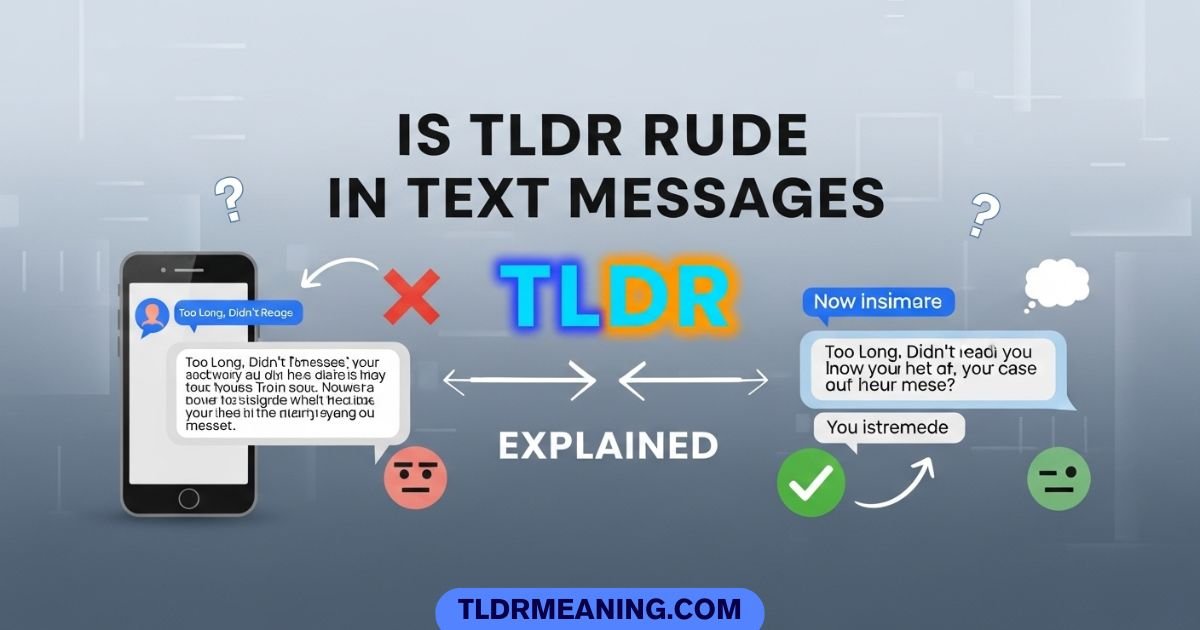
Is TLDR rude in text messages? TLDR is not automatically rude, but it can sound dismissive depending on tone, context, and relationship.
What Does TLDR Usually Mean in Text?
TLDR stands for “Too Long; Didn’t Read.” It began as internet slang on forums and social media platforms. Over time, it became part of modern chat culture and everyday texting.
In simple terms, it has two common uses.
First, someone may use it to admit they didn’t read a long message. For example, if a friend writes several paragraphs, the reply might be “TLDR.” In this case, it literally means they skipped reading.
Second, many people use TLDR as a summary label. After writing a long explanation, they add a short recap starting with “TLDR:” followed by the main point. This use improves conversation clarity rather than dismissing the message.
The confusion happens because both meanings exist. That’s why chat conversation context matters so much.
For a more focused look at everyday messaging use, see TLDR meaning in text.
When Can TLDR Sound Rude?
While TLDR is common in informal messaging style, it can sometimes feel dismissive. Tone, timing, and emotional weight all influence how it sounds.
In Emotional Conversations
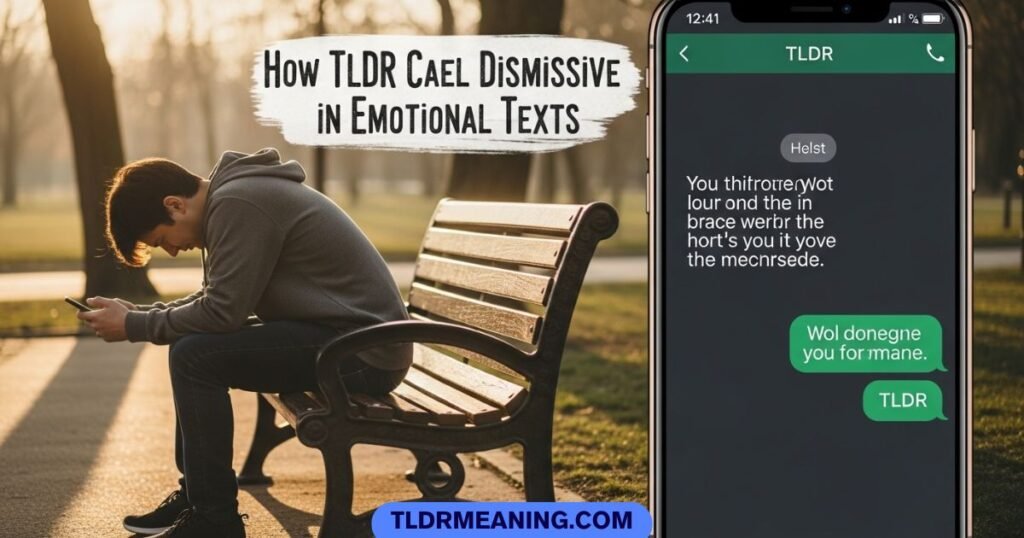
Emotional messaging requires care. If someone shares personal struggles, stress, or feelings, they expect empathy.
Imagine a friend opens up about a breakup or family issue. If the response is simply “TLDR,” it may feel like their emotions were brushed aside. Even if the sender was joking, the short reply behavior can hurt.
This is often when people ask, “is TLDR disrespectful?” In sensitive moments, attention matters more than brevity.
Digital communication etiquette suggests responding with understanding first. Even a short supportive sentence can prevent communication misunderstandings.
In Serious Discussions
TLDR in serious conversation can also sound rude.
During debates, arguments, or important decisions, people want to feel heard. If someone writes a detailed explanation and receives “TLDR” as a reply, it may feel like their effort was ignored.
This reaction connects to texting manners. When a discussion involves responsibility, conflict resolution, or big life choices, dismissive language damages trust.
In these situations, the phrase may appear as avoidance instead of efficiency.
In Professional Messages
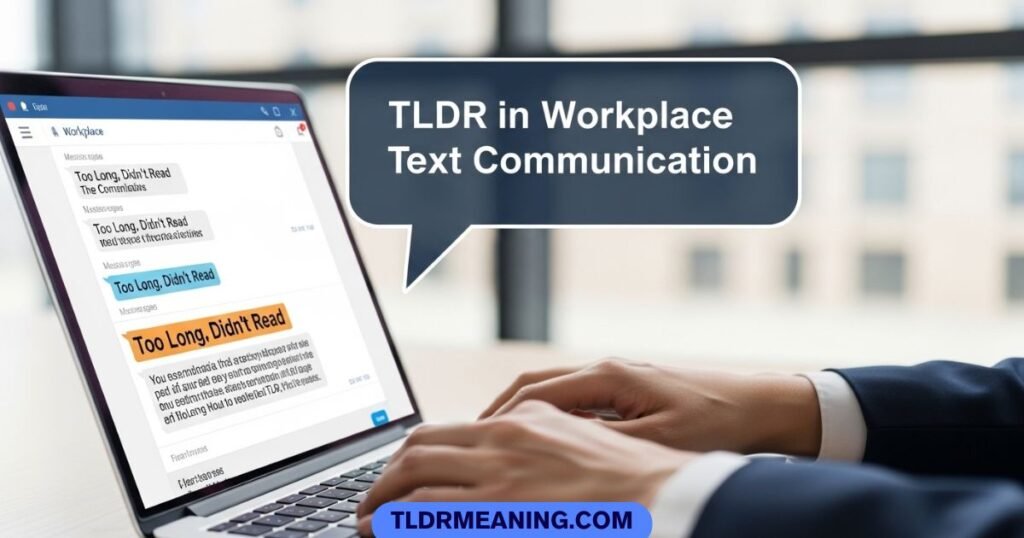
TLDR in professional messages carries higher risk.
Workplace communication usually follows clearer rules. Even though some teams use casual language, professional tone still matters.
If a colleague sends detailed instructions and you reply with “TLDR,” it might appear careless. In formal settings, this can affect credibility.
Instead of using slang, it’s better to ask politely for clarification or summarize your understanding. This maintains digital communication etiquette and avoids negative online message reactions.
When Is TLDR Not Rude?
Despite its potential risks, TLDR is not automatically offensive. In many cases, it’s simply part of normal online communication habits.
Among Close Friends
With close friends, context changes everything.
If both people understand each other’s humor and personality, TLDR may be playful. Friends often use exaggeration or sarcasm in casual chats.
Because strong social cues in texting exist between them, the phrase doesn’t feel serious. It becomes part of shared language.
Here, the answer to “is TLDR rude in text” is usually no.
In Group Chats
Group chat dynamics move quickly. Messages pile up, especially in active conversations.
If someone joins late and types “TLDR?” they might genuinely need a quick summary. In this situation, the phrase helps maintain conversation clarity.
In fact, it can make communication smoother. Instead of scrolling through dozens of messages, a short recap saves time.
This use fits normal TLDR texting etiquette within fast-paced chats.
As a Helpful Summary
Many writers and social media users include TLDR at the end of long posts.
For example, someone might write a detailed explanation about a topic and then add:
“TLDR: The meeting is postponed to Friday.”
This use improves readability. It supports people who prefer shorter content.
In this case, TLDR does not carry any rude meaning at all. It serves a practical purpose.
Why Tone Matters in Text Messages
One major reason TLDR sometimes sounds rude is the lack of emotional cues.
In face-to-face conversation, tone of voice, eye contact, and body language soften short statements. In text messages, those signals disappear.
Because of this, message interpretation becomes subjective. One person may see efficiency, while another sees dismissal.
Short reply behavior can feel abrupt even if the intention was neutral. That’s why awareness of text message tone is essential.
Modern chat culture encourages quick communication. But speed should not replace clarity or empathy. Choosing slightly softer wording often prevents misunderstandings.
Better Alternatives to Saying TLDR
(Polite ways to ask for a short version)
If you’re worried about sounding rude, there are better options.
Instead of “TLDR,” try:
- “Can you share the main point quickly?”
- “What’s the short version?”
- “I missed some details. What’s the key takeaway?”
- “Could you summarize it for me?”
These polite alternatives to TLDR show that you still value the conversation. They reduce the risk of appearing dismissive.
In professional or emotional contexts, this small change improves texting manners and protects relationships.
How to Respond If Someone Thinks You Were Rude
Sometimes you may use TLDR without bad intentions, yet the other person feels hurt.
In that case, stay calm and clear.
You might say, “I didn’t mean to ignore what you wrote. I just needed a quick summary.” This clarifies intention without defensiveness.
If necessary, a brief apology helps. Acknowledging feelings reduces communication misunderstandings.
Online communication is imperfect. Repairing tone quickly keeps trust intact.
Real Examples of TLDR in Different Contexts
Let’s look at how meaning shifts in real situations.
Example 1: Casual friends
One friend sends a long funny story. The other replies, “TLDR 😂.” If both share a joking tone, no harm is done.
Example 2: Relationship conflict
A partner writes several paragraphs explaining feelings. Replying with “TLDR” may feel invalidating. This is when TLDR in relationships becomes sensitive.
Example 3: Workplace chat
A team leader sends project details. Responding with “TLDR” might look unprofessional. Instead, asking for clarification is safer.
Example 4: Online article
An author writes a long explanation and includes “TLDR” with a summary at the end. This improves readability and is widely accepted.
These examples show that the same word can carry very different meanings depending on context.
FAQs
Is TLDR rude in text?
It depends on the situation. In emotional or serious conversations, it may sound dismissive. In casual chats, it is often harmless.
Is saying TLDR offensive?
It is not automatically offensive. It becomes problematic when it appears to ignore someone’s feelings or effort.
When is TLDR rude?
It tends to feel rude in serious conversations, professional messages, or sensitive relationship discussions.
How to respond to TLDR?
You can provide a short summary if appropriate. If it feels dismissive, calmly ask what the person meant.
Why TLDR sounds rude sometimes?
Because text message tone lacks emotional signals. Without context, short replies may seem cold or abrupt.
If you want to better understand the slang itself and how people use it across different platforms, you may also enjoy reading our detailed explanation of TLDR slang meaning and how it fits into modern chat culture.
Final Thoughts: Is TLDR Actually Disrespectful?
So, is TLDR rude in text messages? The answer is not simple. The phrase itself is neutral, but its impact depends on timing, tone, and relationship.
In informal messaging style among friends, it may be harmless or playful. In emotional messaging, serious discussion, or professional settings, it can sound dismissive.
The key is awareness. Paying attention to digital communication etiquette and social cues in texting helps avoid misunderstandings.
Clear and respectful communication does not require long messages. It simply requires intention. When you consider context and choose words carefully, you can use TLDR wisely without causing offense.